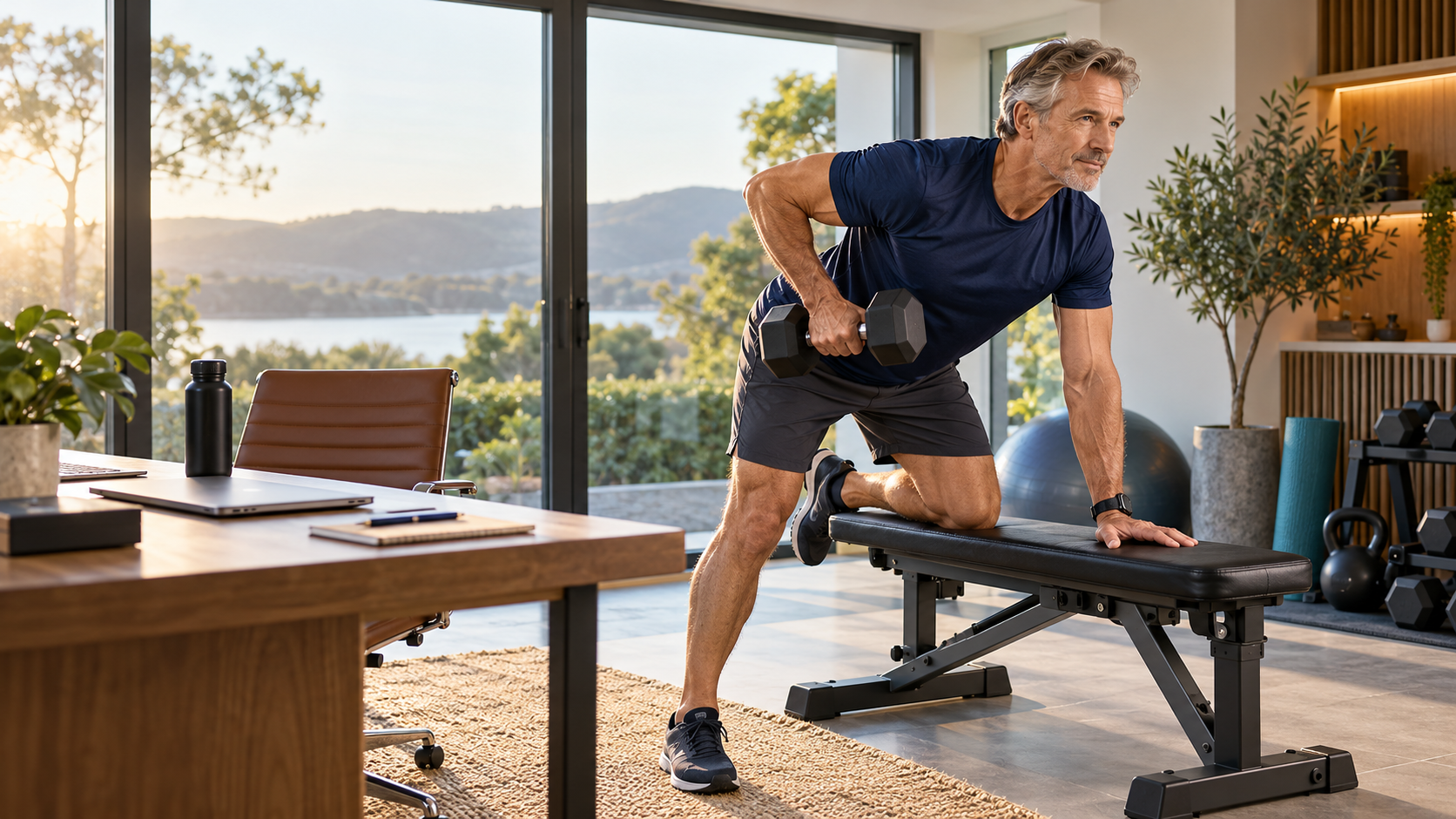
Why Strength Training After 50 Is Essential for Long-Term Performance
You may still be performing at a high level professionally while your physical capacity is quietly moving in the opposite direction.
You continue meeting deadlines, leading people and solving difficult problems. To everyone around you, you appear capable and in control.
But carrying luggage feels harder. Your back becomes tired more quickly. You avoid getting down onto the floor, and you notice that activities that once felt easy now require more effort.
It is tempting to dismiss these changes as normal ageing.
Ageing changes your body, but losing strength without taking action should not be treated as something you are powerless to influence.
For professionals and business owners over 50, strength is not merely a fitness goal. It is part of sustaining your performance, resilience and independence.
Professional success can hide physical decline
A demanding career can make it easy to prioritise everything except your own health.
You protect meetings, deadlines and responsibilities, but exercise gets moved whenever the week becomes difficult. This can continue for years because your experience and determination allow you to keep performing.
The problem is that mental determination does not maintain muscle, strength or physical capability on its own.
If strength training remains optional, your body can eventually become the limiting factor in a life you have worked hard to create.
Strength supports more than exercise
Strength affects your ability to carry, lift, climb, balance, travel and recover from physical demands. It also influences whether you feel confident saying yes to opportunities outside work.
You are not training simply to lift more weight in a gym. You are training so that everyday life continues to feel manageable.
You are preparing for future travel, retirement, family life, hobbies and the unexpected physical challenges that ageing can bring.
A stronger body gives you more options.
Why motivation is not enough
Most people over 50 do not need to be convinced that exercise matters. They need a structure that helps them continue when work is intense, sleep is poor or motivation is absent.
An ambitious programme can feel productive at first, but if it cannot survive a demanding week, it will not protect your health over the long term.
The answer is a personalised strength plan that is simple enough to repeat, challenging enough to create progress and flexible enough to continue when conditions are imperfect.
Using WISDOM to build lasting strength
My WISDOM coaching framework helps people close the gap between understanding what they should do and consistently doing it.
Willingness means accepting the temporary discomfort involved in becoming stronger.
Identity means seeing yourself as someone who trains and protects their physical capability.
Simple means removing unnecessary complexity and concentrating on effective, repeatable actions.
Design means creating a schedule and environment that make training easier to begin.
Overcome means having a plan for pressure, travel, tiredness and disrupted weeks.
Mindset means focusing on what can still improve instead of assuming decline is inevitable.
What are you preparing your body for?
Think about the life you want ten years from now.
Do you want to travel, remain active with your family, continue running a business or enjoy retirement without physical limitations controlling your decisions?
Those outcomes require more than hope. They require preparation.
You do not need to become the person you were at 25. You need to build and protect the strongest version of yourself at the age you are now.
Complete the free CapabilitySpan Assessment at over50andstrong.com to understand where your health is strong, where it may be vulnerable and what deserves your attention next.
- Simple
- Design
- Mindset